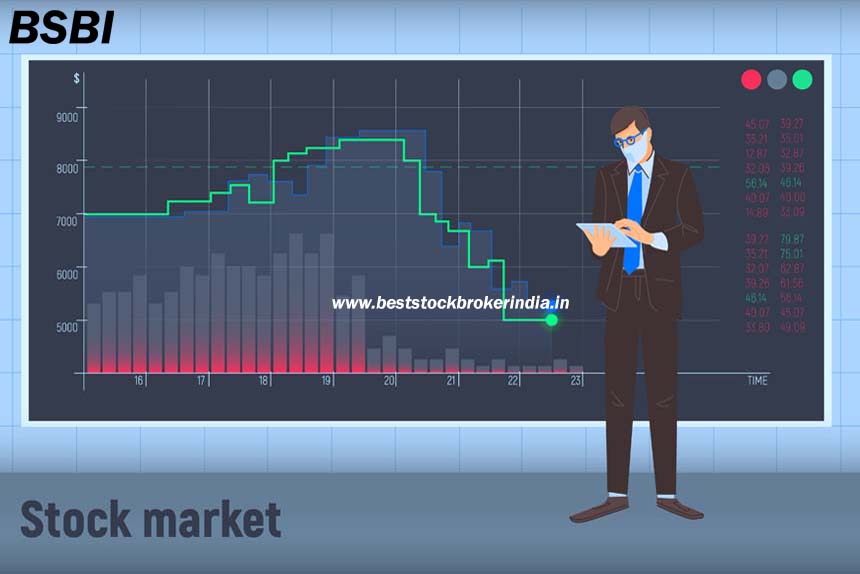


Gone are the days when trading in the stock market was done only by shouting buy/sell orders in crowded exchange floors. Today, technology has transformed trading, and one of the most powerful innovations is Algorithmic Trading (Algo Trading).
But what exactly is algorithmic trading, and how can beginners understand and benefit from it? Let’s dive in.
What is Algorithmic Trading?
Algorithmic trading (or algo trading) uses computer programs and predefined instructions (algorithms) to place buy and sell orders in the stock market.
These instructions are based on parameters such as:
- Price
- Timing
- Quantity
- Technical indicators
Because computers can execute trades in milliseconds, algo trading allows traders to take advantage of opportunities faster than humans.
How Does It Work?
1) A trader/programmer creates an algorithm with specific rules.
Example: Buy stock X when its 50-day moving average crosses above the 200-day moving average.
2) The computer continuously scans the market for this condition.
3) When the condition is met, the algorithm automatically executes the trade without manual intervention.
Benefits of Algorithmic Trading
Speed: Executes thousands of orders in milliseconds.
Accuracy: Eliminates human errors in order placement.
Emotion-Free Trading: Avoids decisions driven by fear or greed.
Backtesting: Algorithms can be tested on past data before applying in live markets.
Cost Efficiency: Lower transaction costs due to automation.
Risks & Challenges
Technical Failures: A small glitch can cause heavy losses.
Over-Optimization: Strategies that work in backtesting may fail in real markets.
Regulatory Restrictions: SEBI in India has strict rules for algo trading.
High Competition: Institutional traders with advanced infrastructure often dominate.
Types of Algorithmic Trading Strategies
Trend Following Strategies
– Based on moving averages, channel breakouts, etc.
Arbitrage Opportunities
– Buying in one market and selling in another to profit from price differences.
Market Making
– Placing buy and sell orders simultaneously to earn the bid-ask spread.
Scalping
– Making multiple quick trades for small profits.
Mean Reversion
– Betting that prices will return to their average over time.
Tools & Platforms for Beginners
In India, several platforms provide algo trading APIs and tools:
Python – Widely used for building custom trading bots.
Zerodha Streak – No coding needed, user-friendly.
Angel One API – For custom trading strategies.
AlgoTrader & MetaTrader – Advanced platforms for global traders.
Who Should Consider Algo Trading?
Traders who want automation to save time.
Tech-savvy investors with basic coding knowledge.
Those interested in data-driven, disciplined trading.
Final Thoughts
Algorithmic trading is revolutionizing the way markets work. For beginners, it opens a world of possibilities to trade efficiently and strategically. However, it’s important to start small, test strategies, and understand the risks before scaling up.
With the right approach, algo trading can be a powerful tool for building systematic and emotion-free trading strategies.